Japanese Frog Tattoo Meaning, Symbolism, Styles & Design Ideas

A Japanese frog tattoo is a distinctive tattoo choice associated with good luck, prosperity, safe travel, returning home, renewal, and positive change. Its symbolism is closely connected to the Japanese word kaeru, which means frog when written as 蛙 and return or go home when written as 帰る. This word connection gives frog imagery a special place in Japanese culture.
Japanese frog tattoos can be designed in many ways, from traditional Irezumi-inspired artwork to modern Neo-Japanese illustrations. Adding elements such as koi fish, lotus flowers, cherry blossoms, peonies, waves, coins, or bamboo can give the tattoo a more personal meaning.
What Does a Japanese Frog Tattoo Mean?
A Japanese frog tattoo generally represents good fortune, prosperity, safe journeys, returning home, renewal, and personal growth. The symbolism comes largely from the linguistic connection between kaeru, meaning frog, and kaeru, meaning to return. Because of this, frogs can represent something positive returning to a person’s life.
The meaning can also change according to the design. A frog with waves may emphasize travel, while a frog with coins can represent financial prosperity. A frog with flowers may communicate renewal, beauty, or personal growth.
Japanese Frog Symbolism
Frogs have positive associations in Japanese culture and folklore. They are connected with water, nature, seasonal change, agriculture, and good fortune. Their ability to move between water and land also makes them a natural symbol of adaptability and change.
For tattoo collectors, the frog can represent overcoming difficulties and starting again. It can also serve as a personal reminder that happiness, health, money, opportunities, or loved ones can return after a difficult period.
Japanese Frog Tattoo Meaning of Good Luck
Good luck is one of the most common meanings associated with Japanese frog imagery. Frog charms and decorative frog figures have been used as symbols of fortune, making the animal a natural choice for a lucky tattoo.
A frog tattoo can represent optimism, favorable opportunities, and positive changes. For someone who has overcome a difficult period, it can serve as a permanent reminder that better circumstances can return.
Japanese Frog Tattoo Meaning of Safe Travel
The connection between frogs and safe travel comes from the Japanese word kaeru, meaning “to return.” This gives frog imagery a special association with returning home safely after a journey.
Because of this meaning, a Japanese frog tattoo can be particularly appropriate for travelers, people who have moved abroad, sailors, military personnel, or anyone who has spent long periods away from home.
Japanese Frog Tattoo Meaning of Prosperity
Japanese frog symbolism can also represent financial prosperity. The idea of money “returning” gives the frog a connection with wealth, business success, and abundance.
A prosperity-focused frog tattoo can include coins, gold details, rice plants, water, or other symbols of abundance. It can represent financial recovery as well as the broader idea of opportunities and success returning to your life.
Japanese Frog Tattoo Meaning of Renewal
A frog’s life cycle makes it a natural symbol of transformation and renewal. Beginning as a tadpole and developing into an adult frog, it goes through a noticeable process of physical change.
For this reason, a frog tattoo can represent a new beginning, personal development, recovery, or leaving an old chapter behind. It can be especially meaningful after a major change in lifestyle, career, relationships, or personal identity.
The Meaning of Kaeru in Japanese Culture
The Japanese word kaeru is central to the symbolism of the Japanese frog tattoo. 蛙 (kaeru) means frog, while 帰る (kaeru) means to return or go home. Although the meanings are written differently, the identical pronunciation creates a strong symbolic association.
This association allows a frog to represent more than simply an animal. It can symbolize returning home, money returning, recovering something lost, or welcoming good fortune back into your life.
Japanese Frogs in Folklore
Frogs appear in Japanese folklore, folk art, decorative objects, and traditional stories. They are often presented as clever, amusing, helpful, or fortunate creatures rather than purely threatening figures.
Their relationship with water and nature also helped connect them with seasonal change and agricultural environments. This positive cultural background gives a Japanese frog tattoo a deeper foundation than simply using a frog because it looks interesting.
Japanese Frog Tattoo and Irezumi
Irezumi refers to traditional Japanese tattooing and is known for large compositions, bold outlines, strong colors, and carefully arranged backgrounds. A frog can work naturally within this style because it can be surrounded by waves, flowers, leaves, rocks, clouds, and other traditional motifs.
A traditional Japanese frog tattoo should be designed as part of the overall body composition rather than treated as an isolated image. Scale, movement, background, and placement all contribute to the final appearance.
Traditional Japanese Frog Tattoo
A traditional Japanese frog tattoo typically uses bold outlines, controlled shading, and strong visual shapes. The frog can be surrounded by traditional Japanese backgrounds such as waves, wind bars, clouds, rocks, or flowers.
The goal is not simply to make the frog look Japanese but to create a composition that follows the body’s natural shape. This approach works particularly well for sleeves, chest pieces, thighs, and larger back tattoos.
Neo-Japanese Frog Tattoo
A Neo-Japanese frog tattoo combines traditional Japanese subjects with modern tattoo techniques. The artist may use realistic anatomy, detailed shading, contemporary colors, or illustrative elements while maintaining Japanese-inspired composition.
This style is a good choice for people who appreciate Japanese symbolism but prefer a more modern appearance. It allows the frog to remain culturally meaningful while giving the artist greater freedom with realism, texture, and color.
Japanese Frog Tattoo Design Ideas
Japanese Frog and Lotus Tattoo
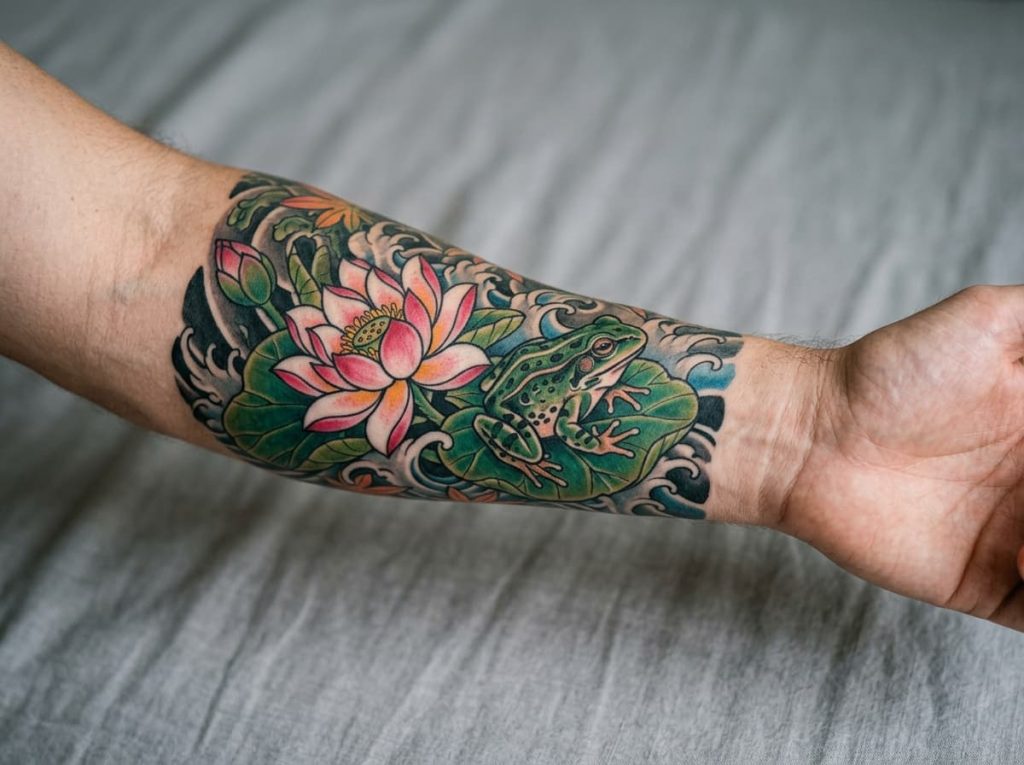
A Japanese frog combined with a lotus flower creates a strong symbol of renewal and personal growth. The lotus can represent purity and rising above difficult circumstances, while the frog adds themes of luck and transformation. Water surrounding both elements can create a natural Japanese composition. This design works especially well for people who want their tattoo to represent healing, change, and a fresh start.
Japanese Frog and Koi Tattoo
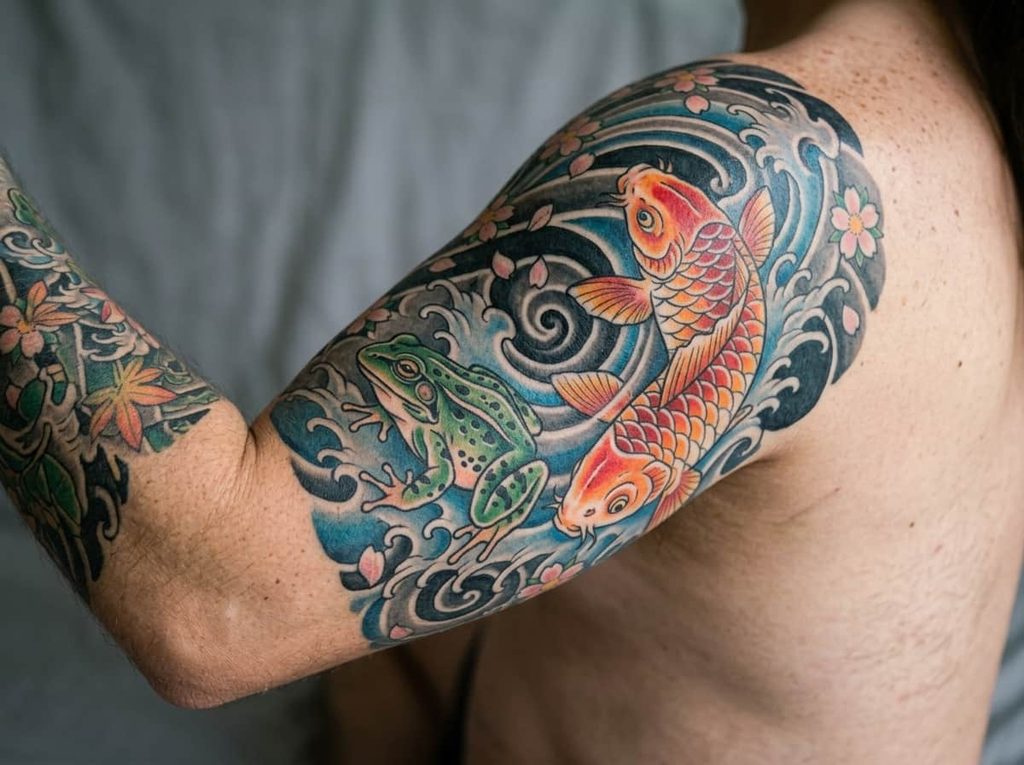
A frog and koi fish make a natural combination because both subjects can be incorporated into a water-based Japanese composition. The frog can represent good fortune and returning home, while the koi symbolizes perseverance and determination. Waves, rocks, and flowers can connect the two subjects. This design is especially suitable for a Japanese sleeve, thigh piece, or larger leg tattoo.
Japanese Frog and Cherry Blossom Tattoo
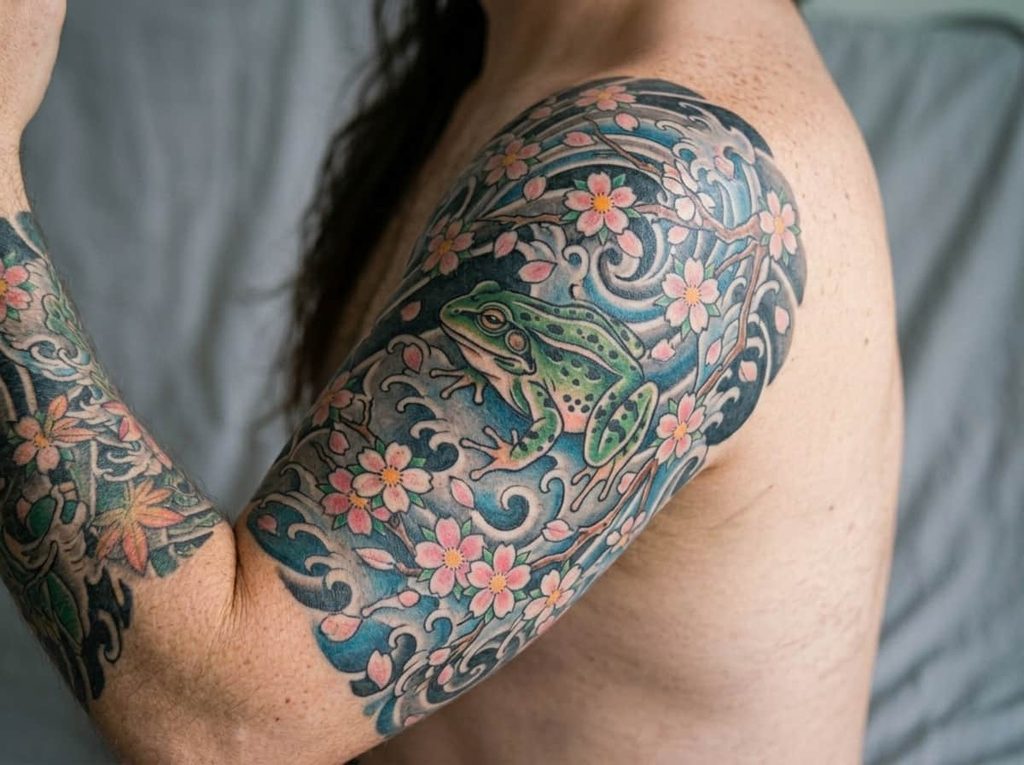
Cherry blossoms, or sakura, represent the temporary nature and beauty of life. When combined with a Japanese frog, the design can symbolize positive change, renewal, and appreciating each stage of life. Falling petals can add movement and softness to the composition. This combination is suitable for people who want a Japanese tattoo with a lighter, more elegant appearance.
Japanese Frog and Peony Tattoo
Peonies are widely used in Japanese tattoo art and are associated with beauty, prosperity, honor, and good fortune. Combining a frog with peonies creates a strong prosperity-focused design. Large flowers can frame the frog while leaves and traditional Japanese background elements fill the surrounding space. This idea works particularly well for large tattoos where the flowers have enough room to show their details.
Japanese Frog and Waves Tattoo
A frog surrounded by Japanese waves can emphasize travel, movement, change, and safe return. The flowing shapes of traditional Japanese waves also work beautifully with the natural curves of the arm, leg, or torso. This design is particularly meaningful for travelers or people who have spent significant time away from home. It can also become the foundation of a larger Japanese sleeve.
Japanese Frog with Coins Tattoo
A frog combined with coins places greater emphasis on wealth, prosperity, and money returning. The coins can be used as small supporting details rather than dominating the design. This makes the tattoo suitable for entrepreneurs, business owners, or anyone who wants their artwork to represent financial growth and recovery. Traditional Japanese decorative elements can make the overall composition feel more cohesive.
Samurai Frog Tattoo
A samurai frog is a playful interpretation of Japanese tattoo imagery. The frog can be shown wearing traditional armor, carrying a sword, or standing in a warrior pose. Although humorous, the design can represent courage, discipline, resilience, and determination. It is an excellent choice for someone who wants a tattoo with Japanese inspiration but prefers something unusual, expressive, and slightly humorous.
Frog on a Lily Pad Tattoo
A frog sitting quietly on a lily pad creates a calmer and more minimalist design. Rather than emphasizing wealth or travel, this composition can represent patience, balance, nature, and peacefulness. Water, small flowers, or subtle Japanese wave patterns can be added without making the design too complicated. It works particularly well as a smaller tattoo on the forearm, calf, or shoulder.
Japanese Frog with Sakura and Waves
Combining a frog, cherry blossoms, and waves creates a more complete Japanese storytelling composition. The frog can symbolize luck and safe return, the waves can represent life’s movement or travel, and sakura can represent impermanence. This combination is particularly effective for larger tattoos because the three elements can be connected through flowing backgrounds and falling petals.
Japanese Frog and Bamboo Tattoo
Bamboo is associated with strength, flexibility, and resilience, making it a meaningful companion for a frog tattoo. Together, the two elements can represent adaptability and the ability to remain strong through changing circumstances. Bamboo can also provide a vertical background, making this combination suitable for the forearm, calf, or side of the leg.
Japanese Frog and Maple Leaf Tattoo
Japanese maple leaves can introduce an autumnal theme and represent change, maturity, and the passing of seasons. When paired with a frog, the design can focus on personal development and accepting life’s changes. The contrast between the frog and colorful maple leaves can create a visually rich tattoo, particularly when incorporated into a larger Japanese sleeve or thigh composition.
Japanese Frog Back Tattoo
A Japanese frog back tattoo provides enough space for a detailed composition. The frog can become the central subject while waves, flowers, clouds, rocks, and seasonal elements fill the surrounding area. Because the back offers a large uninterrupted canvas, it is especially suitable for collectors who want the frog to become part of a complete Japanese artwork rather than a small standalone tattoo.
Japanese Frog Sleeve Tattoo
A Japanese frog sleeve can turn the frog into the central character of a larger visual story. Waves can connect the arm, while flowers, leaves, clouds, and other Japanese motifs create movement around the main subject. This placement works particularly well when the artist plans the entire sleeve before tattooing begins, ensuring that every element follows the natural shape of the arm.
Japanese Frog Thigh Tattoo
The thigh offers enough space for a detailed Japanese frog without requiring the commitment of a full sleeve or back piece. The frog can be combined with peonies, lotus flowers, waves, or seasonal leaves. A vertical design can follow the shape of the leg, while a larger horizontal composition can create a more dramatic Japanese scene.
Japanese Frog Forearm Tattoo
The forearm is a practical location for a medium-sized frog tattoo because the design remains visible while still being relatively easy to cover. A simple frog can work well here, while a more detailed composition can include small flowers or waves. Because the available space is limited, the design should avoid excessive fine details that may become difficult to maintain over time.
Japanese Frog Calf Tattoo
A Japanese frog calf tattoo can use the natural vertical shape of the lower leg to create a balanced composition. The frog can be surrounded by waves, flowers, bamboo, or leaves that move upward along the calf. This placement offers enough space for meaningful detail while remaining relatively easy to conceal when necessary.
Japanese Frog Chest Tattoo
A chest tattoo gives the frog a strong central position and allows surrounding Japanese elements to extend toward the shoulders. Waves, peonies, clouds, or flowers can be used to create balance around the main subject. A chest design can also be expanded later into a larger torso project, making it a flexible choice for someone planning a long-term Japanese tattoo collection.
Japanese Frog Tattoo Color Meanings
Green is the most recognizable color for a frog and naturally connects with nature, growth, luck, and renewal. Black and gray can create a more traditional and dramatic appearance, particularly when strong Japanese-style linework is used.
Red can add energy and intensity, while blue works particularly well with water and travel themes. Gold can strengthen the association with prosperity and wealth. The best color choice depends on the overall composition rather than following a single fixed rule.
How to Choose the Right Japanese Frog Tattoo
Start by deciding what the frog represents personally. If your story is about returning home, the kaeru symbolism can become the central idea. If the tattoo represents financial recovery, coins or prosperity-related imagery may be appropriate. If it represents personal change, lotus flowers, sakura, or seasonal elements can reinforce the theme.
Next, choose the tattoo style and artist carefully. Look at healed examples of the artist’s work and check whether they have experience with Japanese composition. A good Japanese-style tattoo depends on more than drawing the main subject; body flow, background, scale, and spacing are equally important.
Common Japanese Frog Tattoo Mistakes
A common mistake is choosing a design simply because it looks attractive without understanding its symbolism. Another is trying to fit too much detail into a very small tattoo. Japanese compositions generally need enough space for their backgrounds and supporting elements.
It is also better to avoid combining too many unrelated Japanese motifs. A frog, dragon, koi, Hannya mask, peony, cherry blossom, and waves may all look impressive individually, but putting everything into one small design can make the tattoo feel crowded.
Japanese Frog Tattoo and Cultural Respect
A Japanese-inspired tattoo can be appreciated by people from any background, but understanding the meaning behind the imagery is important. Learning about Japanese symbolism and working with an artist who understands the tradition can help create a design that feels intentional rather than superficial.
It is also useful to understand the difference between traditional Irezumi and modern Japanese-inspired tattooing. Both approaches can produce excellent artwork, but they follow different artistic conventions.
How Much Does a Japanese Frog Tattoo Cost?
The price of a Japanese frog tattoo depends on its size, location, complexity, color, artist, and amount of background work. A small frog may take considerably less time than a full Japanese sleeve featuring waves, flowers, and multiple supporting elements.
Experienced Japanese-style artists may charge more because you are paying for artistic skill, composition, technical experience, and years of practice. When comparing artists, portfolio quality and healed results are generally more useful indicators than simply choosing the lowest price.
Frequently Asked Questions About Japanese Frog Tattoos
Is a Japanese frog tattoo lucky?
Yes. Japanese frog symbolism is strongly associated with good fortune, safe return, prosperity, and positive change. The association is particularly connected with the Japanese word kaeru, which can mean frog or return depending on the written characters.
What does a frog tattoo mean in Japanese culture?
A frog can represent good luck, safe travel, returning home, prosperity, renewal, and adaptability. The exact meaning depends on the context and the additional elements included in the tattoo.
What does a Japanese frog tattoo mean for travelers?
For travelers, the frog can symbolize returning home safely. This meaning comes from the linguistic connection between kaeru, meaning frog, and kaeru, meaning to return. Waves and other travel-related imagery can reinforce this idea.
What does a frog with coins mean?
A frog with coins emphasizes prosperity, financial success, and money returning. It can represent business growth, financial recovery, abundance, or the hope that opportunities and wealth continue to come back.
Can I combine a Japanese frog with a koi fish?
Yes. Frog and koi imagery works naturally together because both can be incorporated into a water-based composition. The frog can represent luck and return, while the koi can represent perseverance, ambition, and overcoming obstacles.
What flower goes well with a Japanese frog tattoo?
Lotus flowers, cherry blossoms, peonies, chrysanthemums, and other Japanese floral motifs can work well with frogs. The best choice depends on the intended meaning and the overall composition of the tattoo.
What is the best placement for a Japanese frog tattoo?
The best placement depends on the size and complexity of the design. Forearms and calves work well for medium tattoos, while thighs, chests, backs, and sleeves provide more space for detailed Japanese compositions.
Are Japanese frog tattoos suitable for small tattoos?
Yes, but simple designs generally work better at a small scale. A highly detailed frog with waves, flowers, and other traditional elements may need more space to remain clear as the tattoo ages.
Should a Japanese frog tattoo be green?
No. Green is a natural choice, but black, gray, blue, red, and gold can also work depending on the style and symbolism. The overall color palette should complement the design rather than follow a strict rule.
Final Thoughts
A Japanese frog tattoo combines an unusual subject with rich cultural symbolism. Its connection with kaeru gives it meanings related to returning home, good fortune, prosperity, safe travel, and positive change.
The frog can also be personalized through surrounding imagery. Lotus flowers can emphasize renewal, koi can represent perseverance, waves can suggest travel, sakura can represent life’s changing nature, and coins can strengthen the prosperity theme.
The best design is one that combines meaningful symbolism with good composition and appropriate scale. If you want a traditional Japanese appearance, choose an artist experienced in Japanese tattooing and body-flow composition. If you prefer a modern interpretation, a Neo-Japanese approach can provide more freedom with realism and color.
Ultimately, a Japanese frog tattoo does not have to be chosen simply because frogs look interesting. Its greatest strength is the story behind it—the idea that luck, prosperity, happiness, or even the person you love can always find a way to return.